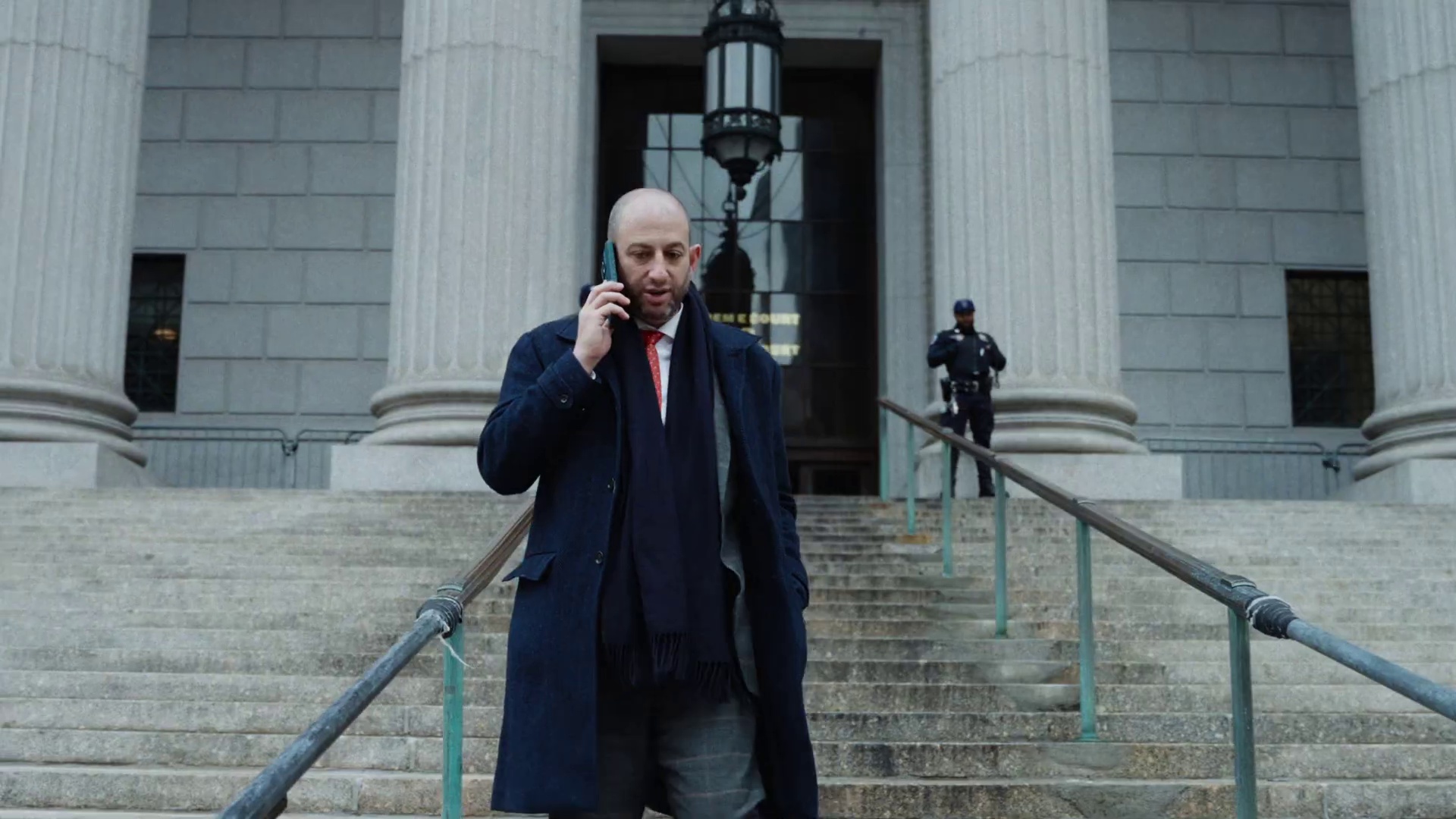





WATCH OUR STORY
See Why Clients Trust Us
Learn about our approach to criminal defense and hear directly from our team about how we fight for our clients' rights.

WATCH OUR FIRM OVERVIEW VIDEO
 50+
50+
Years Legacy
Second-Generation Law Firm
Treating You Like Family Since 1976
For nearly 50 years, Spodek Law Group has been treating clients like family. As a second-generation law firm, we've built our reputation on loyalty, trust, and unwavering dedication to our clients' freedom.

Cases Others Deemed Unwinnable
Todd Spodek's defense of Anna Delvey became a Netflix sensation. We take on the toughest cases others won't touch—and we fight to win. When your freedom is at stake, you need attorneys who never back down.
 100+
100+
Media Features
Trusted Legal Expert
As Seen On Major Networks
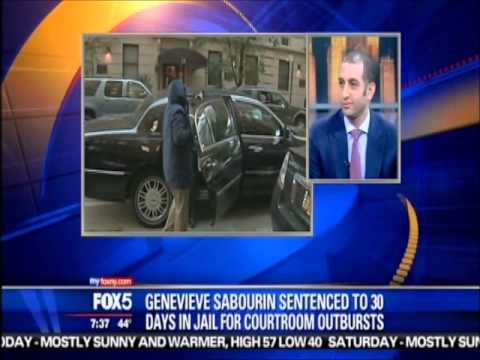
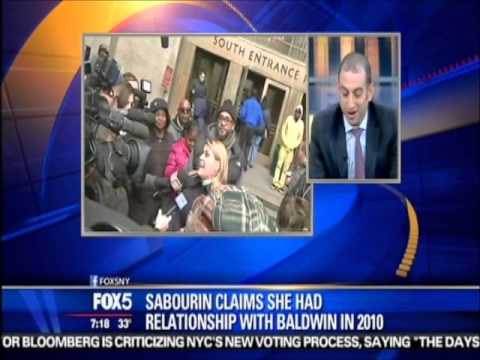
Todd Spodek is regularly featured on Fox News, CNN, NBC, and Bloomberg providing expert legal analysis. When the biggest networks need a criminal defense expert, they call Spodek Law Group.
 24/7
24/7
Availability
Selective Client Intake
White-Glove Service
Unlike firms that take any case, we're selective about who we represent. This means every client gets personalized, premium attention. Your case is never just a number—it's our mission.
“When your freedom is on the line, you need attorneys who fight like your life depends on it—because it does.”
TODD SPODEK
CLIENT TESTIMONIALS
What Our Clients Say
“Todd Spodek saved my career and my life. When I was facing federal charges, he fought tirelessly and got my case dismissed. I cannot thank him enough.”
— Robert M.



AS FEATURED IN
THE PRESS.
Todd Spodek's high-profile cases have made headlines across major media outlets.
 FOX 5
FOX 5
 NEW YORK POST
 NEWS FEATURE
 COURTROOM
 CBS NEWS
 ANNA SOROKIN
 MAGAZINE
 CBS NEWS NY

CHARGES DISMISSED
Federal Wire Fraud
CHARGES NOT GUILTY
Grand Larceny
CHARGES DISMISSED
Drug Trafficking
CHARGES DROPPED
Assault in the First Degree
CHARGES ACQUITTED
Securities Fraud
CHARGES DISMISSED
DUI / DWI
Treating You Like Family Since 1976: New Jersey's Premier Criminal Defense Firm
Over 50 Years of Combined Experience Defending Your Freedom
We Take On Cases Others Won't Touch—And We Win.
When you're facing criminal charges, you need more than just a lawyer—you need a fighter. At Spodek Law Group, we've spent nearly five decades building a reputation for taking on the toughest cases and achieving outcomes others said were impossible.
Our team of elite defense attorneys has handled every type of criminal charge—from DUI/DWI offenses to federal fraud, drug crimes to violent felonies. But what truly sets us apart isn't just our experience—it's our philosophy.
Unlike law firms that prioritize volume over results, we're highly selective about our clients. We limit our caseload so every client receives the white-glove treatment they deserve: direct access to senior partners, personalized defense strategies, and round-the-clock availability.
Our practice areas span the full spectrum of criminal defense: DUI/DWI defense, drug crimes, violent crimes, sex crimes, white collar offenses, and federal charges.
EXCLUSIVE MEDIA INTERVIEWS
TODD SPODEK: VOICE OF LEGAL EXCELLENCE
Featured Legal Expert on Major Networks

YouTube · 10:42
Todd Spodek Featured Interview
Criminal defense attorney Todd Spodek discusses high-profile cases and legal strategy

YouTube · 1:08:14
Are You Garbage Goes to Court
Are You Garbage podcast special episode with Todd Spodek, a top NYC defense attorney
More Appearances & Interviews









What You Need
to Know
Critical questions answered by our NJ criminal defense team. If you are facing charges or an investigation, understanding the system is your first advantage.
What should I do immediately after being arrested in New Jersey?
Being arrested in NJ is a scary experience. Regardless of whether it's your first rodeo or not, the first 24 hours after an arrest are extremely important to your defense strategy. The steps you take, or don't take, can impact the outcome of your case. At Spodek Law Group, we take an extremely proactive approach when it comes to building a criminal defense strategy. When officers arrest you, they're typically going to inform you of the charges against you, read you your Miranda rights, and take you into police custody where you'll be booked and placed in a holding cell while you wait for further questioning or proceedings. Depending on the severity of the case, you could be eligible for a pretrial release, or you might be held until your first court appearance. You need to immediately exercise your right to remain silent. Anything you say CAN and will be used against you in court. Even if you believe you have an explanation for the situation, you must resist the urge to talk to officers without your attorney. Simply say you are invoking your right to remain silent. At this point, you, or a family member, should consult and contact an experienced NJ criminal defense attorney. An experienced attorney at Spodek Law Group can step in immediately, protect your rights, ensure you do not make outlandish statements which can be used against you later, and ensure there's a legal strategy. NJ law ensures that anyone arrested has the right to a fair, and timely, first court appearance. You have the right to a phone call with an attorney or family member, and the right to be free from unlawful searches. Often we see clients make critical mistakes — for example, they speak to an officer without their attorney present. Anything you say, even casually, can be taken out of context and used in the prosecutor's case against you. Law enforcement agents are trained to gather info, and persuade you that you don't need legal help in order to get evidence ASAP. It's important you avoid resisting the arrest, even if you believe it's unjust. Physical resistance or arguing with agents can result in additional charges, like assault. We also recommend that you do not overshare on social media — prosecutors and law enforcement agents are trained to monitor posts, messages, and even deleted things, in order to use them against you.
How much does a criminal defense attorney cost in New Jersey?
When you're facing criminal charges in NJ, hiring a private criminal defense attorney is critical for protecting your rights. Many people hesitate to take legal representation because they have concerns about the cost. There are many factors which can influence the cost of hiring a criminal attorney. The type and severity of the charges will impact the cost — defending against a misdemeanor versus a felony will drastically change the cost of legal representation. The tougher the case, the more hours, and the higher the cost. The experience of the attorney also matters. A fresh law school graduate will charge less than an experienced criminal attorney. If your case goes to trial, this will also impact the cost, because the attorney representing you has to sit in trial, prepare for it, and that all takes hours and hours. Criminal attorneys typically charge a flat fee for certain types of cases, regardless of how long it takes or what happens along the way. Other attorneys in NJ will charge a retainer fee, which means you pay upfront, and it goes towards the initial hours of legal work. As the lawyer works on the case, they deduct their hourly fee from the retainer. If the case requires more work than covered by the retainer, they'll ask you for additional funds. There are other additional costs too — court fees, investigation fees, expert witnesses — which can factor into the overall cost of representation. If you hire an attorney with significant experience in cases similar to yours, this can help cut down the number of hours it'll take, since they already have the experience and know the steps.
What is the difference between a disorderly persons offense and an indictable crime?
Like many states in the country, criminal charges are classified into various types based on the severity of the crime you allegedly committed. NJ uses terms like indictable crimes, disorderly persons offenses, and petty disorderly persons offenses. An indictable crime is similar to a felony, a term used in other states. If you've been charged with an indictable criminal offense, or issued a complaint for a disorderly persons offense, it's important to understand the differences between these types of offenses, and the implications on your case. Typically, an indictable offense is considered much more serious under NJ criminal law than a disorderly persons offense. The important thing to know is that they come with different punishments. Indictable offenses carry at least more than a year in NJ State Prison. Indictable offenses are classified into various degrees, and each degree determines a different level of potential punishment. First degree indictable offenses include, but are not limited to: forgery, theft crimes, stalking, to name just a few. Even the lowest level offense has the potential for jail time of at least one year. For example, fourth degree crimes have potential jail time of up to 18 months.
Can I get my criminal record expunged in New Jersey?
Probably, yes. NJ has some of the most lenient laws in the country right now when it comes to getting your record expunged. Most criminal records are eligible for expungement, but serious crimes committed in the state of NJ — like murder, arson, robbery, sex crimes, and drug manufacturing/distribution — are permanently ineligible no matter how much time has passed. Assuming you didn't commit one of those offenses, and your charge isn't on that list, the waiting period depends on what you were convicted of. For a disorderly persons offense (NJ's version of a misdemeanor), the period is five years after you finish your sentence. For an indictable offense (felony), it's a lot longer — approximately around ten years since the crime. They definitely make you wait a longer time, to make sure you're properly rehabilitated, and aren't a threat to society. Another interesting thing is that there's an "early pathway" option that can cut the felony wait down to five years and disorderly persons down to three. But not everyone is eligible for this. You have to show the court you've kept your nose clean and that expungement is in the public interest. It requires effort on your part, and isn't simple. Many people who are repeat offenders are automatically disqualified. Another point of interest is that NJ passed a "Clean Slate" law that lets you expunge an unlimited number of qualifying convictions after ten years, which is huge if you have multiple offenses. This helps you as a repeat offender get a clean slate if you can show you've rehabilitated and aren't a threat.
What happens if I'm charged with a DUI/DWI in New Jersey?
This is a great question, and we often hear it from many people. First thing to know — the NJ legal system classifies most DWI/DUI offenses as traffic violations, not criminal offenses. That sounds good, but don't let it fool you. The penalties for a DUI/DWI hit hard, and it means your case goes through municipal court. In this court, there's no right to a jury trial. A judge decides everything associated with your punishment, and the trial. For a first offense with a BAC between .08% and .10%, on average you are going to be looking at fines in the $250–$400 range, up to 30 days in jail (realistically you'll probably get 12–48 hours in the Intoxicated Driver Resource Center program), a $1,000/year insurance surcharge for three years, and most important to your livelihood — your license gets suspended until you install an ignition interlock device (IID) on your car. If your BAC was .10% or higher, the fines will go up significantly, the IID stays on longer (7–15 months depending on how high you blew), and if you were at .15%+, you're also looking at a 4–6 month hard license suspension on top of the IID requirement. Second and third offenses get far worse — NJ's legal system does not like repeat offenders, it takes DUI seriously, and it wants you to learn a lesson. A second DUI/DWI offense within ten years brings 30 days of community service, 2–90 days in jail, a two-year license suspension, and the IID stays on for 2–4 years after that. The third offense is significantly worse and brings a lot of penalties including 180 days in jail (with potential for some of that to be served in a rehab program), an eight-year license suspension, and a $1,500/year fine for three years. Also worth mentioning — if you refuse the breathalyzer, that's a separate charge under NJ's implied consent law, with its own fines and license suspension that can run consecutively with your DWI penalties. One more thing that creates issues for people: a DWI can get escalated to an actual criminal charge (indictable offense) if there are aggravating factors — like causing serious bodily injury, killing someone, or having a minor in the car. And if you get caught driving within 1,000 feet of a school zone while intoxicated, the penalties basically double.
Will I have to go to jail if I'm convicted of a crime?
This is a great question we often hear from a lot of potential clients. The answer is, it depends. It depends entirely on what you're convicted of and your history. The short answer is this: if you're convicted of a first or second degree indictable offense, there's a presumption of incarceration. This means the judge is basically expected to send you to state prison unless they find it would be a "serious injustice." First degree indictable crimes carry 10–20 years, second degree is 5–10. For the serious crimes — aggravated assault, robbery, sexual assault, major drug distribution — you're likely doing time with a high degree of certainty. For certain violent crimes covered under the No Early Release Act (NERA), you are required to serve at least 85% of your sentence before you're even parole-eligible. And if crimes like murder are involved, that bumps that range to 30 years to life. For third and fourth degree crimes in the state of NJ, there's actually a presumption against incarceration for first-time offenders. Third degree crimes in NJ are 3–5 years on paper, fourth degree up to 18 months, but in practice a lot of people with clean records walk out with probation, fines, community service, or some combination. The judge assigned to the case usually weighs aggravating factors against mitigating factors and decides where you land in the range. If you're looking at a disorderly persons offense (NJ misdemeanor), max is 6 months in county jail, and petty disorderly is 30 days — but again, first-timers often avoid actual jail time.
How long does a criminal case take in New Jersey?
It depends on what you're charged with. For disorderly persons offenses, which are essentially misdemeanors handled in municipal court, you're looking at a fast track. They wrap up in about 60 days, but they can stretch to 6 months or more if it goes to trial or there are complications. You will get a summons, you'll show up for an arraignment, and the case will either plead out or go to a bench trial. For indictable offenses, there are a lot of steps, and each one has a timeline. After the arrest, you get a first appearance within 48 hours if you're in custody. Then there's usually a Pre-Indictment Conference where your attorney and the prosecutor try to work something out early. If it doesn't end there, the prosecutor has 90 days from the date of the complaint to present your case to a grand jury. After the indictment, you're arraigned within about 14 days. At this point you enter the pretrial phase — discovery exchange, status conferences, motions hearings, plea negotiations — which is where most of the time gets used up. The state has 180 days from the date of indictment to bring the case to trial or resolve it.